Intel: Getting Their Groove On
 Intel has today introduced their newest weapons in the CPU wars. Not satisfied with a 200MHz FSB lead over their rival AMD, Intel is launching a few new products today to ensure they stay on top of the CPU world. It was just a few months ago that Intel introduced the world’s first and only 3GHz processor (clocked at 3.06GHz). To further enhance the performance gain and to compliment that CPU introduction, Intel unleashed a new technology called Hyper-Threading or (H-T). Intel is adding to that technology today and bringing more firepower to the table.
What is most surprising about today’s launches is that Intel is doing a great more than just introducing a new CPU. Truth be told, the 3.00GHz CPU being launched today is (going by clock speed alone) slower than the 3.06GHz CPU launched in January. This is an indication of the confidence that Intel is bringing to this launch. They are introducing a slower CPU into the market today while increasing the performance bar. How? Let’s talk about it.
Introduction: Intel Pentium 4 3.0GHz Northwood @ 800MHz FSB
Intel’s new Pentium 4 is running at an even 3.0GHz on a quad pumped Front-Side Bus. Previous Intel CPU Pentium 4’s have run on 100 and 133MHz Front-Side Buses. Intel, to make the point that they are all about performance, is today introducing their first ever 800MHz FSB. Using quad pipes, each running at 200MHz, Intel is running away from AMD on FSB power. As you know, AMD just introduced their 333MHz FSB a few months ago and a rumored 400MHz FSB is reportedly in the works. Our review today with feature Intel’s 3.0GHz CPU competing against AMD’s performance champion Athlon XP 3000+ (Barton core). For those interested, the math on this new 3.0GHz P4: 200MHz FSB (Quad pumped at 800MHz) using a multiplier of 15 thus 15 * 200 = 3.00GHz.
Introduction: Intel 875P “Canterwood” motherboard
This motherboard launch is perhaps the most significant (re: performance) since the introduction of Camino or i820. There are numerous improvements in Canterwood. The vast majority of the improvements are designed for performance. Let me break down the enhancements step by step.
800MHz FSB
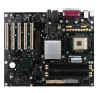 We talked about the 800MHz FSB already but it is important to remember that this motherboard can run all P4’s that are socket 478. Those with 400, 533 or 800MHz FSB’s. It is important to remember that this is a socket 478 motherboard and besides the FSB change, the CPU is otherwise the same as any other “Northwood”. We have long talked about the importance of a good, strong FSB with simulations since they are so CPU driven. Will this new FSB increase the speed lead over AMD’s XP 3000+? Read on…
Dual-Channel DDR
We have been hearing about dual-channel DDR since we began reviewing Athlon MP’s way back at 1.2GHz. While we knew its importance, it was hard to see the actual impact on performance. When we got our first look at nForce 2, we knew there would be a performance increase associated with using dual-channel DDR but the increase was clearly incremental and not the robust increase we all expected. DDR 400 seems to be the new memory standard being championed by both Intel and AMD. Intel has decided to take a shot at dual-channel DDR and the increase is well beyond incremental as you soon see.
Both AMD and Intel seem to be looking to DDR 400 as the performance benchmark. We have not seen both companines pushing the same memory so strong since we were using PC100/PC133 DIMMs.
Performance Acceleration Technology (PAT)
I would like to ask Intel more about how this technology works and will likely do this at E3. On a grand scale, “PAT” is a refined and advanced manufacturing process technology. Essentially, PAT performs two main tasks to improve performance:
- Clock improvement in CPU request to perform memory access.
- Clock improvement in DRAM Chip Select, which effects how the memory controller decides how to process the data.
I’m planning to go more into PAT as time goes on so expect to hear more about PAT later.
Onboard ATA-150 SATA Soft RAID
A feature that many gamers have been using for years is RAID 0. This performance enhancing technology is designed to span data across both drives. This allows both drives to be spinning and transferring data simultaneously or in “parallel”. Intel is introducing RAID 0 through the ICH5R (Integrated Communications Hub) for Serial Advanced Transfer Access (SATA). This is the new ATA-150 standard recently introduced. We were able to get our hands on two 120GB Seagate Barracuda 7200 RPM ATA-150 (SATA) hard drives to test RAID 0.
We installed a single drive first and installed our driver disk during the initial setup of Windows XP. The driver installed and once we were up and running WinXP, the second drive was a snap to install once the Intel Accelerator 3.0 software was installed that had SATA RAID support. Within one minute, we had drive one propagating over to drive two for parallel operation. The benefits of RAID 0 are undeniable. It’s no wonder those who run RAID 0 rant and rave about the performance. This was my first actual chance to test RAID on a desktop/workstation and it was an eye opening experience.
Gigabit LAN
 We are all familiar with 10/100 networks from the widespread adoption of Broadband and large LAN gaming networks. As an avid LAN gamer, I have been using networking for play since the early 90’s when our group was using BNC cabled looped from machine to machine with a terminator on each end (oh those EF2000 game sessions!). Those were the days but look how far we have come! On-board this Intel 875P is 10X the speed of a 100 mbps LAN.Using the Intel Communications Streaming Architecture (CSA) Intel has implemented a 256MB/s connection between the North Bridge (875P MCH) and the Intel GbE (1000 mbit LAN). All I need now is a Gigabit HUB!
Hyper-Threading Technology
Not to downplay the role of Hyper-Threading, it is still a major feature and big draw to using a P4. We will see a newer revision of H-T when we see Prescott, which is Intel’s next generation Pentium 4 processor. Consistently, simulations are where H-T benefits the most. We have scores of sims that support multi-threaded environments.
Serial ATA (SATA)
 SATA is a new standard for hard drives. The connections are quite different than those of standard IDE drives. They do plug into the motherboard but use long thin cables with small connectors. Installing them was a snap.
As I mentioned this motherboard supports dual SATA in RAID 0. To my knowledge, this is the first motherboard that has support for SATA RAID.
Benchmark notes:
We have included some new benchmarks to test Hyper-Threading and Intel’s new FSB. We all know how long it takes Falcon 4 to load up those missions after creating a campaign. Having run Falcon 4 on many dual processor systems, I know the benefit SMP as load times are reduced substantially. I decided to test how long it took from the splash screen to the jet on the runway. We called that test “Falcon 4 load times”. You will see it below. The lower the time, the better.
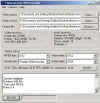
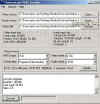
We have used Main Concept 1.3 before but wanted to discuss how we did it. I took the opening AVI from Flanker 2.5 and converted it to DVD format. At the bottom of the screen capture is the listed duration of time it took to make the conversion. Lower times are better.
I managed to test IL2: Forgotten Battles by creating a .TRK file. The file is about 5 minutes long and ended up being a pretty good little demo. It’s all cockpit time with me shooting down a friendly (blue on blue) just to get some action in. It has quite an ending too! I’ll post the file in the next day or two so you can all test with it and post the results. .
When you look at the scores for 3DMark03 be sure to look at the CPU scores along with the overall score. Remember, this is a CPU review. There are now CPU tests in 3DMark.
IL-2: Forgotten Battles has two API tests. I ran my benchmark on OpenGL and on DirectX to see if there is still a FPS difference between the two APIs.
Please note that the Intel system is running SATA RAID 0 and the AMD is only running a single ATA-133 drive. Most of the scores and tests have very little HD loads after the benchmark starts but I want to point out the difference.
All the games and tests are run with maximum image quality (including 32-bit color and textures) on the in-game menus. No FSAA or Anisotropic Filtering was enabled. VSync was disabled.
System 1 Setup:
Our test system had the following components installed:
- Intel 3.00GHz Pentium 4 with “Hyper-Threading”
- 800MHz Front-Side Bus
- 512MB of PC3200 DDR (2 x 256MB)
- Intel 875P “Canterwood” Motherboard
- ATI Radeon 9700 PRO 128MB
- Catalyst 3.2 drivers
- Sound Blaster 128 PCI
- 3Com 10/100 NIC
- Dual Seagate Barracuda 120GB 7200 RPM SATA ATA-150 running RAID 0
- MSI 52X CDROM
- Newly installed Windows XP PRO with Service Pack 1
- Microsoft Mouse PS2
- Microsoft Force Feedback 2 Joystick
System 2 Setup:
Our test system had the following components installed:
- AMD Athlon XP 3000+ (2.16GHz)
- 333MHz Front-Side Bus
- 512MB of PC3200 DDR (2 x 256MB)
- ASUS nForce2 Motherboard
- ATI Radeon 9700 PRO 128MB
- Catalyst 3.2 drivers
- Sound Blaster 128 PCI
- 3Com 10/100 NIC
- Seagate Barracuda 120GB 7200 RPM ATA-133
- Sony 52X CDROM
- Newly installed Windows XP PRO with Service Pack 1
- Microsoft Mouse PS2
- Microsoft Force Feedback 2 Joystick
Benchmarks
Synthetic:
- MadOnion’s 3DMark2003
- Sysmark 2002
- SiSoft Sandra 2003 SP1
- PCMark2002
- Main Concept 1.3
- ScienceMark
- CodeCreatures Pro
Games:
- Falcon 4.0 SP3
- IL-2 Sturmovik 1.2ov
- IL-2: Forgotten Battles OpenGL and Direct 3D
- Ghost Recon Patch: English Patch
- Comanche 4 Patch: Demo Benchmark
- FS2002 Patch: Fresh install only
Synthetic Benchmarks
3DMark2003
| With Hyper-Threading | Without Hyper-Threading | Barton 3000 |
 |
 |
 |
 |
 |
 |
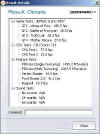
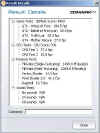
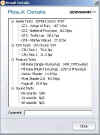
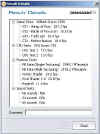
As you look at the scores, please pay attention to the CPU portion of the tests as a primary focus. You can see the Intel CPUs with a performance lead. Not a huge margin but a fairly sizable margin nonetheless. It is amazing to think that AMD’s CPU is still only running at 2.16GHz and giving up almost 500MHz of FSB speed. The scores do indicate that AMD has one strong CPU for only running at 2.16GHz.
Sysmark 2002
| With Hyper-Threading | Without Hyper-Threading | Barton 3000 |
 |
 |
 |
The lead for Intel in Sysmark 2002 is very large. Hyper-Threading is having a large impact in the Internet Content Creation scores. Keep in mind that only the Photoshop portion of the test actually makes use of Hyper-Threading (to my knowledge). There is little doubt that the RAID 0 also played a nice benefit to Intel’s scores. Hopefully, AMD will find a vendor to get out a motherboard that supports SATA RAID 0. What a difference it makes doing HD thrashing tasks.
Sisoft Sandra 2003 SP1
| With Hyper-Threading | Without Hyper-Threading | Barton 3000 |
 |
 |
 |
 |
 |
 |
 |
 |
 |
 |
 |
 |
 |
 |
 |
 |
 |
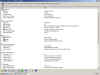 |
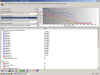
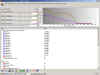
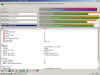
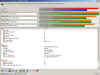
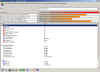
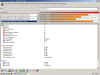
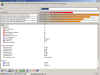
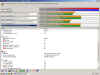
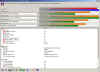
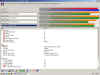
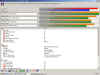
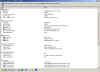
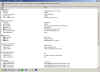
The Sandra scores are always fun to look over. Take particular care to see the Memory Bandwidth scores. The dual channel 400MHz DDR is kicking serious butt on Canterwood! It’s even stronger than the PC1066 RDRAM. That is amazing. The rest of the scores fall in line with what we would expect.
Also be sure to look at the SATA “disk” scores. Fastest ever RAID scores. The RAID 0 Seagate drives even tame the 15K SCSI U320 drive. Quite eye-popping.
PCMark2002
| With Hyper-Threading | Without Hyper-Threading | Barton 3000 |
 |
 |
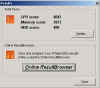 |
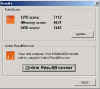
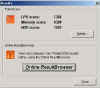
PCMark 2002 is also fun to look over. The CPU scores are interesting but again it is the memory scores that catch the eye. The P4 is just overpowering. Keep in mind that both the nForce2 and 875P support dual channel memory and both are running the same PC3200 sticks of DDR 400MHz.
Main Concept 1.3
| With Hyper-Threading | Without Hyper-Threading | Barton 3000 |
 |
 |
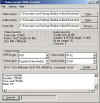 |
Once again, the benefits of Hyper-Threading are apparent. The H-T enabled P4 is almost 10 seconds faster than the non H-T P4 and AMD Athlon XP 3000+. That is a 20% gain.
ScienceMark
| With Hyper Threading | Without Hyper-Threading | Barton 3000 |
The scores again show the gain for Hyper-Threading. What is amazing is that to “get” the Hyper-Threading feature on a P4 all you need to do is install WinXP PRO or Win2K Pro and your “on”. The AMD Athlon XP 3000+ manages to defeat the non H-T P4 here by almost exactly 5%.
CodeCreatures Pro
| With Hyper-Threading | Without Hyper-Threading | Barton 3000 |
 |
 |
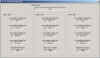 |
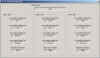
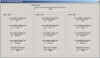
The scores for CodeCreatures Pro amount to a virtual wash. By fractions, the scores are for the P4 with H-T, P4 and XP 3000+. This is one of the best looking benchmarks to test and it does scale well with CPU and VPU speed.
Comanche 4
| With Hyper-Threading | Without Hyper-Threading | Barton 3000 |
 |
 |
 |
 |
 |
 |
Comanche 4 favors the P4 by more than 10%.
Game Scores:
|
1024 x 768 x 32
|
1600 x 1200 x 32
|
|
| Falcon 4.0 SP3 |
57 / 48 / 51
|
53 / 43 / 46
|
| IL-2 Sturmovik |
73 / 74 / 72
|
56 / 57 / 55
|
| IL-2: Forgotten Battles (OpenGL) |
80 / 77 / 40
|
50 / 47 / 24
|
| IL-2: Forgotten Battles (D3D) |
68 / 66 / 39
|
49 / 48 / 22
|
| Ghost Recon |
193 / 193 / 165
|
106 / 106 / 100
|
| FS2002 |
37 / 37 / 29
|
37 / 37 / 29
|
Falcon 4.0 Load Times
With Hyper Threading: 6 seconds
Without Hyper-Threading: 24 seconds
Barton 3000: 26 seconds
Falcon 4 loves Hyper-Threading. F4 is best run on multiple threads. Load times are especially friendly to these H-T enabled P4’s. The Athlon XP does very well against the “vanilla” 3.0GHz P4.
IL-2 used to be a stronghold for AMD. Intel must be doing something that IL-2 likes because they are now running neck and neck.
Now look at Forgotten Battles! Oh my goodness! The Intel based machines are dominating . This is a complete turnaround from what we saw with IL-2 when it first came out and Intel was lagging far behind. SimHQ has learned that Intel sought out to find out what the problem was with IL-2 and it seems they have done some serious work to improve their performance in IL-2. Now it’s AMD’s turn to find out what is wrong. OpenGL is still the king for frame rate. In addition, there is a texture setting when in OpenGL called “Perfect” that improves image quality even higher. Direct3D can not run the setting and must drop down to “Excellent”. So, OpenGL is not only faster but also has the option for superior image quality as well.
Ghost Recon is another big win for the P4 although 1600×1200 is much closer.
FS2002 is yet another Intel victory. Over 20% difference in performance is nothing to sneeze at especially when the difference is being in the 20’s or in the 30’s.
Finally, we have the scores of the load times in Falcon 4. Can you believe that load time score disparity? Certainly the RAID 0 drives are having some impact but load times are clearly faster when running on multiple threads. 6 seconds from splash to runway on a fresh load. That is simply amazing.
Conclusion
Intel is strutting right now. Make no mistake. They love their position in the market (the world’s financial situation could be a lot better though!) and are continuing to execute while driving their performance through the roof. AMD is doing their best to play catch up but with the delay to Hammer, they are in a very tight spot. AMD’s consistent lure has always been price but many are complaining that their prices have risen to “Intel like” levels for certain chips. Barton was a nice boost to their performance but this new Canterwood platform along with the new 800MHz FSB, dual-channel DDR and continued strength of Hyper-Threading, AMD has some tough days ahead to keep competing in the high-end. Our benchmarks clearly show that Intel is in compete control of the performance market.
Surprisingly, many of us were expecting to see Intel introduce a 3.20GHz P4 with Canterwood but again, I think it is clear that Intel believes that they can introduce a slight slower P4 and still pick up ground in the CPU wars. If your AMD or an AMD fan, that is a frightening thought because it means that Intel has the 3.20GHz P4 just waiting in the wings and could potentially spring it on the market at will.
We do know that Springdale is right around the corner. This will be Intel’s new OEM and “mainstream” desktop motherboard for the future. There will likely be many flavors and options for consumers to buy. More on those when we have a sample on hand.
Pricing for this new 3.0GHz P4 is $417 in 1K units while estimates for Intel based “Canterwood” motherboards is expected to be in the $170 range at retail. AMD’s Athlon XP is $334 on the street right now so there is some disparity in price. If your going to err on the side of performance, your choice is obvious favoring the Pentium 4.
In summary, Canterwood is the motherboard to own right now as Intel seems to be showing AMD what true dual channel DDR is all about even though AMD introduced it over two years ago. I’m still a bit baffled how the memory bandwidth disparity can be so high. Same memory but very different results. There are no questioning these results however, Intel is running the floor. This motherboard/CPU combo might be Intel’s best ever. Features, performance and stability all at once and with a relatively strong price point. Intel might just have captured the price/performance ratio from AMD. This combo is that strong.
Related posts:
 Dueling Dual Cores: AMD vs. Intel
 Intel 3.20GHz Pentium 4 on 800MHz FSB with Hyper-Threading
 Intel 925X Express Chipset and Pentium 4 3.4 EE CPU Review
 Page 2
Intel 925X Express Chipset and Pentium 4 3.4 EE CPU Review
Intel 925X Express Chipset and Pentium 4 3.4 EE CPU Review Page 2
 Intel Dual-Core Pentium Performance
 Page 4
Intel Dual-Core Pentium Performance
Intel Dual-Core Pentium Performance Page 4
 Intel Pentium 4 670 3.8GHz
 Page 5
Intel Pentium 4 670 3.8GHz
Intel Pentium 4 670 3.8GHz Page 5