Q. BoE is advertised as being able to create 61 different types of missions. How many are currently available with DGen in Forgotten Battles version 1.22?
A. Before I answer the actual question I just want to explain the mission creation dynamics in a little more detail. We have six main mission groups: airspace patrol; ground attack; escort; recon; scramble; and transfer. Within each mission type we have multiple subtypes: for example a ground attack may be against moving vehicle columns, a stationary artillery position, bombing a supply depot, striking a train junction, etc. There are 61 of these mission sub-types in BoE. However the variety doesn’t stop there. Each mission sub-type can be against one of thousands potential target locations, and the actual target may be of several different sub-types in each case. For example, even if technically you might be sent on two “ground attack / artillery” missions, the first one may be against a lone 3-gun battery near the Normandy coast, and the other one may be against a large 12-gun battery near Falaise with lots of flak and targets of opportunity around. In other words, while both missions are from one of the 61 available mission types, the actual missions you get to fly are very different.
In addition to all this, the 61 mission types do not include any variations of the enemy opposition. There is a whole new algorithm at play there, with dozens more possible variations. For example, in one “escort / heavy bomber / train station strike” mission your package of B-17s may be attacked by several consecutive flights of Bf-109s and FW-190s, while the other mission of the same type will have the Forts drop their eggs unopposed while you’ll be free to drop down and strafe some targets on the ground.
So, to go back to your original question, the general number of mission types per side is about the same in BoE and Forgotten Battles. The number is unique per country, and some countries may have more mission types than others. However this number is really not the best representation of mission variety you will get. The thousands potential target locations and many variants of target types and enemy opposition all combine to create literally millions of potential missions in BoE.
Q. What criteria determines that a mission is a success or failure?
A. The criteria that determine mission success are usually pretty simple: just do what the mission briefing tells you to do. However it doesn’t mean that you cannot proceed to the next mission if you haven’t done what the briefing tells you. Each player will be able to toggle the Instant Mission Success flag for their campaigns, and with the flag on the mission will be considered completed the second it starts, and you will be able to exit it at any time and proceed to the next mission — of course granted that you’ve survived the previous one. With the Instant Success flag off, the player will still not be required to complete the main mission objective to move on; he’ll simply need to land in one piece. Completing the objective will also let you move on to the next mission, without requiring you to land.
Q. How will the front lines be different from how they are currently generated in Forgotten Battles?
A. This is another area we’ve spent a lot of time working with. The basic idea is that you won’t only see the front line in the mission briefing, but you will also see it in the mission itself. What we’re basically doing is placing opposing ground units around the front line and letting them duke it out. This results in you seeing explosions, shells and some smoking destroyed objects as you fly over the front line.
However if we created an equally intense amount of ground fighting all across the front line the missions would become virtually un-playable Therefore we only create the ground fighting around the areas over which the player will pass. So if you stray way off course and cross the front line far away from the indented waypoints, you will not see the fighting below you.
Related Posts:
Related posts:
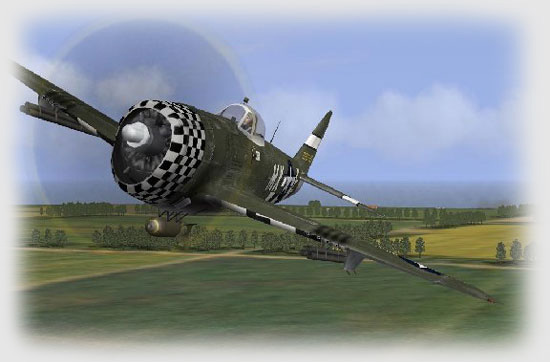 Just Flight – Battle Over Europe
 Page 2
Just Flight – Battle Over Europe Page 3
Just Flight – Battle Over Europe Page 5
Just Flight – Battle Over Europe Page 6
Just Flight – Battle Over Europe Page 7
Just Flight – Battle Over Europe Page 8
Just Flight – Battle Over Europe
Just Flight – Battle Over Europe Page 2
Just Flight – Battle Over Europe Page 3
Just Flight – Battle Over Europe Page 5
Just Flight – Battle Over Europe Page 6
Just Flight – Battle Over Europe Page 7
Just Flight – Battle Over Europe Page 8
 Wings Over Europe: Cold War Gone Hot Page 2